
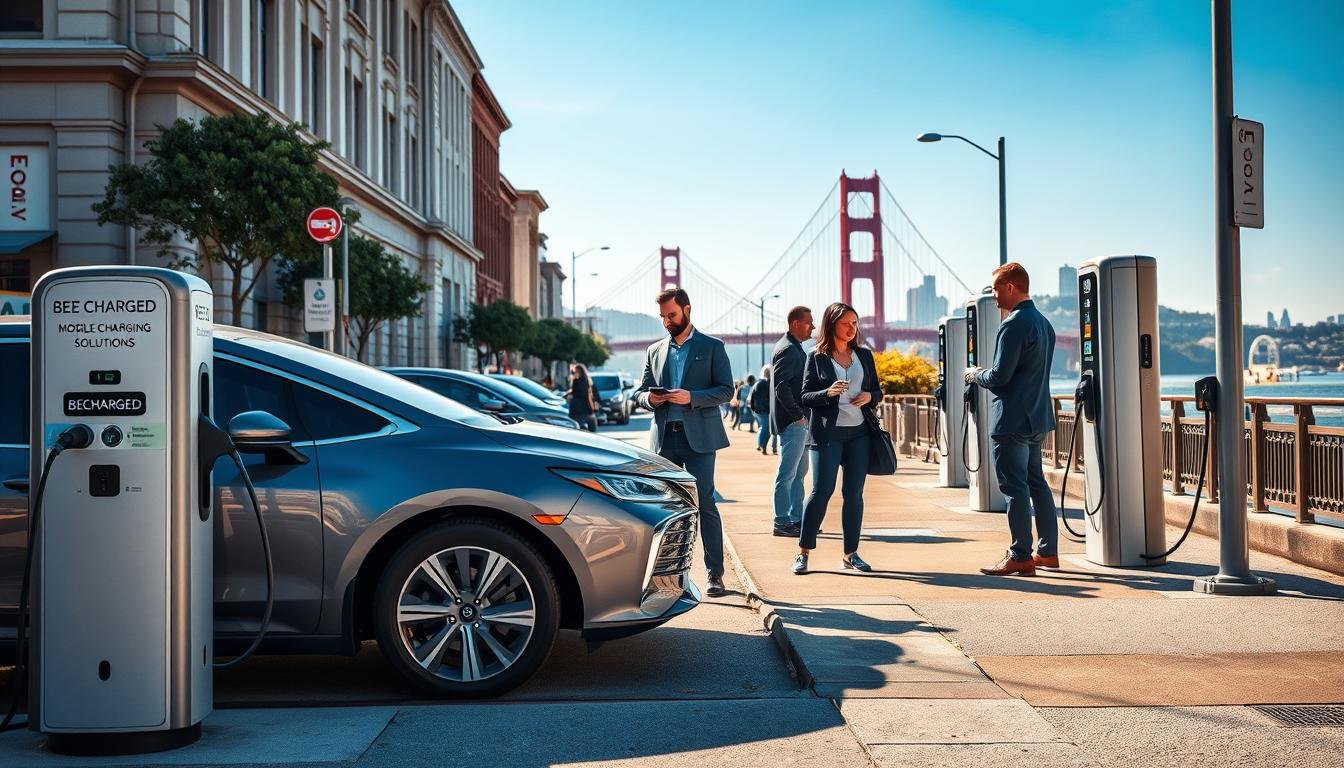
Living in an apartment in San Francisco presents a unique challenge for electric vehicle owners. A significant portion of the city’s population resides in multi-family housing, often without a private garage. This creates a major obstacle to adopting cleaner transportation.
The city has ambitious climate goals, aiming for a large percentage of private vehicles to be electric within the next decade. However, most charging currently happens at a personal residence. This gap between adoption rates and infrastructure availability is a critical issue for urban dwellers.
We understand that renters deserve the same convenient experience as homeowners: coming home, plugging in, and waking up to a full battery. Our mission is to bridge this gap with innovative, accessible solutions designed specifically for city living.
Our comprehensive approach includes mobile charging services and 24/7 emergency roadside assistance, available at 888-675-9555. We provide the reliable support needed to make EV ownership a reality for everyone, ensuring equitable access to sustainable transportation.
Key Takeaways
- A large majority of San Francisco residents live in multi-family housing without dedicated parking.
- The lack of home charging access is a primary barrier to electric vehicle adoption for city dwellers.
- San Francisco has set aggressive targets for increasing the number of electric vehicles on its roads.
- Innovative charging solutions are required to serve the unique needs of the renting population.
- Mobile services and round-the-clock support can provide the convenience and reliability renters need.
- Achieving the city’s climate goals depends on making EV ownership practical for everyone.
EV Charging Challenges in San Francisco’s Multifamily Housing
For the majority of San Francisco dwellers who lease their homes, accessing reliable EV charging remains an unresolved issue. The city’s unique rental market creates specific infrastructure gaps that traditional solutions cannot address effectively.
Trends in Renting and the Growing Demand for EV Chargers
Nationally, renters represent 44 million households. In San Francisco, this percentage is even higher. This creates a massive underserved market for electric vehicle infrastructure.
Property owners face complex decisions about installing chargers. The demand for EVs continues to grow among residents. Buildings without adequate charging options risk losing tenants to competitors.
Barriers to Home Charging for Renters
Landlords often question the return on investment for charging installations. As one property manager noted, “We’re not gas stations” when considering tenant requests for chargers. The costs can be prohibitive.
Electrical upgrades, construction work, and ongoing electricity costs deter many building owners. Tenants cannot justify expensive installations for temporary residences. This creates a fundamental incentive misalignment.
Data shows homeowners are three times more likely to own EVs than renters with similar incomes. The barrier isn’t financial capability but infrastructure access. This gap highlights the need for innovative solutions.
Mobile infrastructure approaches circumvent these traditional barriers. They eliminate costly permanent installations and complex negotiations. This represents a more practical path forward for urban EV adoption.
Innovative Curbside and Mobile Charging Solutions
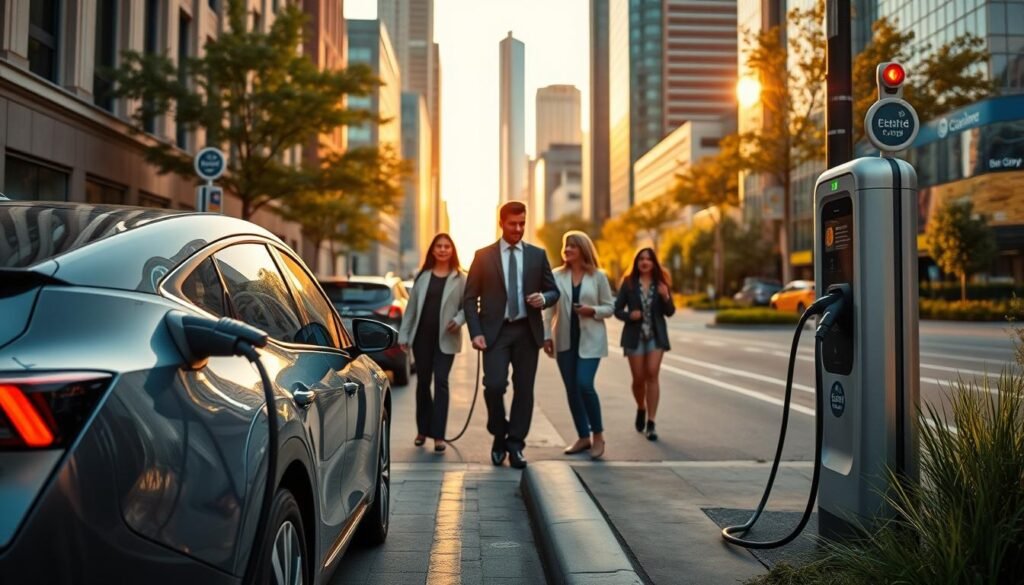
Curbside charging technology is revolutionizing how urban dwellers power their electric vehicles without dedicated parking spaces. These solutions bring charging infrastructure directly to where people actually park.
Curbside Charging Pilots and Their Impact on Urban EV Adoption
San Francisco’s Fillmore Street pilot represents a breakthrough in urban EV infrastructure. The compact, fire-hydrant-sized curbside chargers draw minimal power from adjacent buildings.
Installation takes just 2-3 days with minimal sidewalk disruption. Property owners can earn up to $1,000 annually by hosting these units. The pilot program tests pricing models and parking enforcement strategies.
| Feature | Curbside Charging | Traditional Stations | Mobile Solutions |
|---|---|---|---|
| Installation Time | 2-3 days | Weeks to months | Immediate deployment |
| Cost per Hour | $1-$5 | $2-$8 | Membership-based |
| Charging Time | 6-8 hours | 4-10 hours | 30 min emergency boost |
| Flexibility | Fixed locations | Fixed locations | Vehicle comes to you |
Mobile EV Charging, Emergency Roadside Assistance, and Membership Programs
We provide mobile charging services that bring power directly to your vehicle. Our Emergency EV Roadside Assistance ensures help is available 24/7 at 888-675-9555.
The Membership Elite Access program offers priority scheduling and guaranteed response times. This complements fixed infrastructure by serving areas without permanent charging stations.
Additional Resources and Contact Options
Explore our podcast for educational content about EV ownership. Property managers can learn about mobile infrastructure solutions for their buildings.
For immediate assistance or commercial Level 3 charging needs, call 888-675-9555. Our comprehensive ecosystem includes towing services and emergency support.
Infrastructure Finance and Third-Party Investment Models
Third-party investment approaches are emerging as the most practical solution for bringing EV infrastructure to rental communities. These models eliminate upfront costs for property owners while ensuring professional installation and maintenance.
Case Studies on Public-Private Partnerships in EV Charging Deployment
Dallas-based Amperage Capital demonstrates this approach effectively. The company leases parking spots from multifamily property, installs chargers at their expense, and leases equipped spots to EV-owning tenants.
East Bay Community Energy’s innovative program uses “tolling agreements” with charging developers. The utility pays fixed monthly fees over ten years to cover investment and operations.
The Role of Third-Party Infrastructure Finance in Multifamily Properties
These models address critical challenges. Many multifamily building are over fifty years old, requiring expensive electrical upgrades. Traditional installation becomes economically unfeasible for most owners.
Our fleet services complement fixed infrastructure investments. Mobile charging capacity serves multiple properties without permanent installations. This scalability attracts institutional investors seeking predictable returns.
We also offer commercial Level 3 charging solutions that enable property managers to provide fast charging amenities. They avoid bearing full capital costs or technical complexity.
65% of SF Residents Rent—Here’s How APEX Solves Your EV Charging Problem: A Closer Look at Policy and Economic Impact
San Francisco’s ambitious climate goals require innovative approaches to charging infrastructure that address both policy and economic realities. The city aims for 25% electric vehicles by 2030, needing over 600 new public chargers to reach its 1,760-unit goal.
Incentives, Regulations, and Policy Approaches Shaping the EV Market
Federal funding faces uncertainty despite recent $15 million grants. States like California offer installation incentives, but such programs remain rare nationally. Equity-focused policies prioritize low-income communities for half of $2.5 billion in federal charging grants.
| Policy Level | Funding Stability | Implementation Speed | Equity Focus |
|---|---|---|---|
| Federal Grants | Variable | Slow | Strong |
| State Incentives | Moderate | Medium | Limited |
| Local Programs | High | Fast | Strong |
| Private Solutions | Consistent | Immediate | Growing |
Economic Implications for Renters and the Future of Urban Mobility
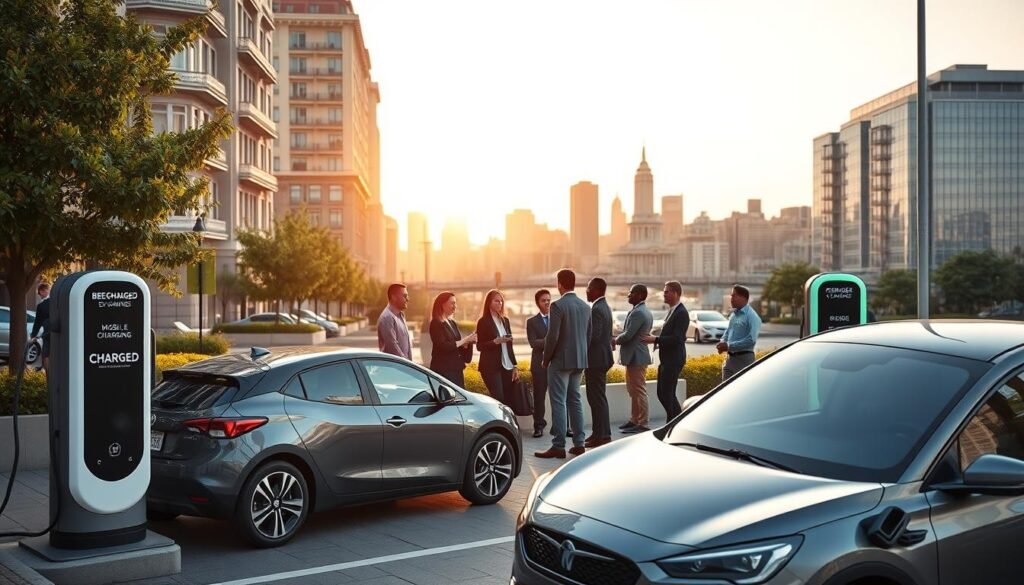
Lower-priced EVs like the $26,000 Chevrolet Bolt combined with tax credits make electric cars increasingly affordable. Renters benefit from predictable charging costs through membership programs.
Our mobile solutions help cities meet targets without waiting for fixed station buildouts. Emergency roadside assistance at 888-675-9555 complements this approach. With EVs representing over one-third of new registrations, flexible infrastructure becomes essential for urban mobility.
Conclusion
A truly equitable transition to electric mobility must include every resident, regardless of housing type. The core challenge in San Francisco and similar city centers is providing reliable charging access for the majority who lease their homes.
No single fix will work for everyone. A multi-faceted way forward combines fixed chargers like curbside units with flexible mobile services. This ensures your car gets the power it needs, even without a garage at home.
We provide the comprehensive solution. Our 24/7 emergency roadside assistance, mobile charging, and membership programs are designed for this exact scenario. We eliminate the barriers that have kept apartment dwellers from going electric.
Everyone deserves the convenience of sustainable transportation. Call 888-675-9555 now to access our full range of services. Let’s make electric vehicle ownership a reality for you.
FAQ
What is curbside charging and how does it work in San Francisco?
Curbside charging involves installing public electric vehicle chargers on city streets, typically in parking spots. These stations provide a vital solution for apartment dwellers and renters who lack access to a home garage. In San Francisco, these chargers are part of a city pilot program, allowing drivers to park and charge their vehicles overnight or during the day using a mobile app or RFID card.
I live in an apartment building. What are my options for EV charging?
Residents of multifamily properties have several options. You can advocate for your landlord or property manager to install charging stations in the building’s parking garage. Alternatively, you can utilize public chargers, including curbside charging stations or mobile EV charging services that bring power directly to your vehicle. Membership programs with companies like APEX offer flexible, on-demand charging solutions.
How much does it cost to install an EV charger in an apartment building?
The installation cost for a charging station in a multifamily property varies based on the existing electrical infrastructure. Costs can range significantly, but third-party investors and utility company incentives often help offset the expense for property owners. These financing models make it more feasible for buildings to add this valuable amenity without high upfront costs.
Are there any city programs or incentives for EV charging installation?
Yes. San Francisco has initiatives and pilot programs aimed at expanding EV infrastructure, especially in areas with high rental populations. These often include grants, rebates, and streamlined permitting processes for installing chargers in multifamily housing. Utility companies also offer programs to support the necessary electrical upgrades.
What is mobile EV charging and how can it help me?
Mobile EV charging is a service where a company brings a charger directly to your vehicle’s location. This is ideal for emergency roadside assistance when you’re out of power, or as a scheduled top-up for drivers without reliable home charging. It provides maximum flexibility and ensures your car is always ready to go.
How long does it take to charge an electric vehicle at a public station?
Charging time depends on the charger’s power level and your vehicle’s battery. Level 2 public chargers, common in curbside installations, can fully charge most cars in 4-8 hours. This makes them perfect for overnight charging while parked on the street or during a workday.