
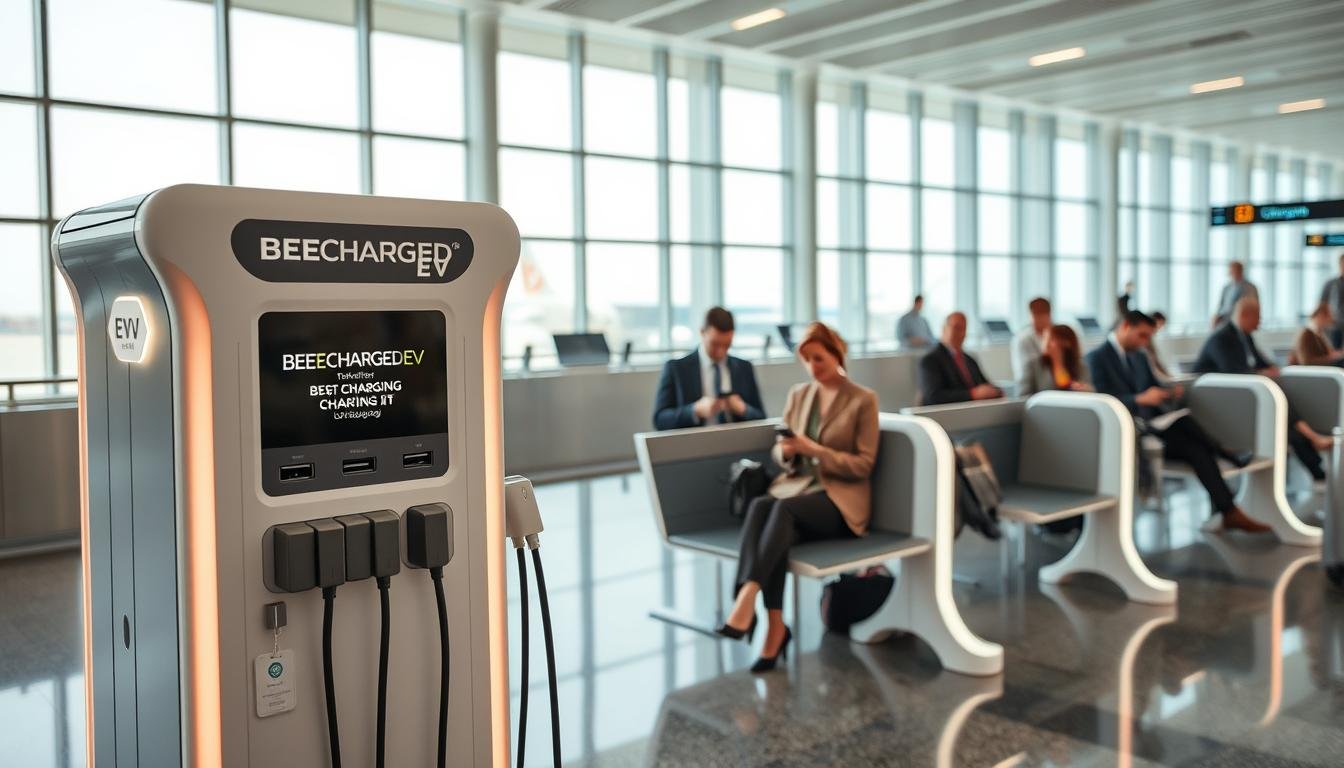
Modern travel hinges on connectivity. For countless people, their phone and other electronic devices are essential tools. They manage flight details, boarding passes, and vital communications. This reliance creates a significant challenge when battery levels drop, especially during layovers or unexpected delays.
This need is particularly acute at locations with limited infrastructure. Federal agencies like the FBI and TSA have issued warnings about public USB ports. While confirmed “juice jacking” incidents are rare, the concerns are real. Balancing accessibility with security is a complex task for facility managers.
We understand these challenges intimately. Beecharge Dev specializes in robust charging solutions designed for demanding environments. Our approach ensures airports and other airport facilities can offer secure, dependable power. This transforms a potential point of travel anxiety into a seamless, trusted amenity.
Key Takeaways
- Electronic devices are indispensable for modern air travel, making reliable charging a necessity.
- Limited infrastructure at certain aviation hubs creates a significant gap in passenger services.
- Federal agencies highlight cybersecurity risks, though real-world incidents are unconfirmed.
- Providing charging access requires balancing convenience with legitimate security protocols.
- Specialized solutions exist to deliver secure and efficient power in resource-limited settings.
- For businesses and fleet managers, Beecharge Dev offers tailored infrastructure support. Contact us at 888-675-9555.
Understanding Mobile Charging Challenges in Remote Locations
The cybersecurity landscape for public charging infrastructure presents unique operational challenges. Facility managers must navigate both technical realities and passenger perceptions when designing power access solutions.
Cybersecurity Risks and Juice Jacking Concerns
Federal agencies have issued repeated warnings about juice jacking at public USB charging ports. This theoretical threat involves modified ports that could potentially access data during charging.
Despite these warnings, no confirmed juice jacking incidents exist. Modern phones include built-in security protections that require user permission for any data transfer.
Impact on Passenger Convenience and Data Safety
The perception of risk often outweighs the actual threat. This creates challenges for aviation facilities seeking to provide essential services.
Travelers need reliable power access, especially during extended waits. The real risk typically involves physical device theft rather than digital compromise through USB connections.
Understanding this balance helps operators make informed decisions about charging infrastructure that serves passenger needs effectively.
Can you provide mobile charging at remote airfields and smaller regional airport
Limited infrastructure locations demand flexible charging approaches that traditional fixed installations cannot provide. Regional aviation facilities face unique operational constraints that require specialized solutions.
Beecharge Dev’s Innovative Charging Solutions
We deliver adaptable power infrastructure designed for challenging environments. Our mobile charging units eliminate the need for costly permanent installations.
These solutions scale with passenger volume fluctuations. They offer reliable power access without major electrical upgrades. This makes them ideal for seasonal operations.

Key Considerations for EV Charging Infrastructure
Implementing effective power systems requires careful planning. Facility managers must balance multiple factors to ensure success.
| Consideration | Fixed Stations | Mobile Solutions |
|---|---|---|
| Installation Cost | High upfront investment | Lower initial expense |
| Flexibility | Permanent location only | Deploy anywhere needed |
| Scalability | Limited expansion options | Easy capacity adjustment |
Mobile infrastructure provides superior adaptability for remote airfields. It addresses budget constraints while maintaining service quality. This approach ensures passengers receive dependable power access.
Implementing Secure and Efficient EV Charging Strategies
Effective power management requires balancing security protocols with passenger convenience at aviation facilities. We recommend a multi-layered approach that addresses both cybersecurity concerns and operational efficiency.
Using Personal Chargers and USB Data Blockers
The safest way to charge your devices involves using your own charger with a standard wall outlet. This approach eliminates potential data transfer risks from public USB charging ports.
For added security, USB data blockers provide affordable protection. These small devices allow power flow while blocking any data transfer capability between charging ports and phones.
Portable Power Banks and Fleet Charging Options
Carrying a portable power bank offers the most convenient and secure way to maintain device battery life. The FAA requires these devices in carry-on luggage only due to fire safety concerns.
For fleet operations, dedicated charging infrastructure ensures business-critical devices maintain power without security compromises. Our mobile solutions provide reliable charging that doesn’t rely on public ports.
“Always use your own charging cable with a standard electrical outlet when possible. This simple practice provides the highest level of data security.”
Tips to Prevent Unauthorized Data Transfers
Keep software updates current on all devices. Manufacturers regularly release security patches that enhance protection against potential vulnerabilities.
Simple things like proper cable management and positioning stations in high-visibility locations reduce security risks. Training staff on these considerations ensures they can answer passenger questions effectively.
| Security Measure | Protection Level | Implementation Cost |
|---|---|---|
| Personal Charger + Wall Outlet | Highest Security | Low |
| USB Data Blocker | High Security | Very Low |
| Portable Power Bank | Complete Isolation | Medium |
| Charge-Only USB Ports | Moderate Security | Medium |
Beecharge Dev provides comprehensive mobile infrastructure solutions to support safe charging practices. Contact us at 888-675-9555 for consultation on implementing secure charging strategies at your facility.
Conclusion
Forward-thinking aviation facilities recognize power access as an essential passenger service. Modern travel depends on electronic devices for every aspect of the flight experience. This makes reliable charging infrastructure indispensable for passenger satisfaction.
Security concerns should not prevent offering this critical amenity. The actual risk is minimal when proper precautions are implemented. Beecharge Dev’s solutions provide practical, cost-effective power without traditional infrastructure costs.
Balancing convenience with security measures ensures diverse passenger needs are met. Clear information about safe practices helps people feel confident using available services.
We encourage aviation facility managers to take an informed approach. Reliable infrastructure represents an investment in operational efficiency and competitive positioning.
To learn more about implementing these solutions, contact Beecharge Dev at 888-675-9555. Explore our full range of services including fleet charging and commercial infrastructure at our website.
FAQ
What is juice jacking and why is it a security threat at airports?
Juice jacking is a cybersecurity attack where criminals tamper with public USB charging ports to install malicious software on connected devices or steal data. This threat is significant at airports because travelers often use public stations to charge phones and other devices, potentially exposing personal information.
How can I safely charge my device at an airport without risking data transfer?
To ensure security, use a personal AC wall charger plugged directly into a power outlet instead of a public USB port. Another effective method is to use a USB data blocker, a small adapter that prevents data transfer while allowing power to flow to your device, protecting it from juice jacking.
What mobile EV charging solutions does Beecharge Dev offer for remote airfields?
Beecharge Dev provides robust, portable charging stations and fleet charging services designed for remote locations. Our solutions deliver reliable power without requiring permanent infrastructure, supporting electric vehicles and ensuring operational continuity for airport ground support equipment and passenger vehicles.
Are portable power banks a safe alternative to fixed charging stations for travel?
Yes, using your own portable power bank is one of the safest ways to charge devices while traveling. Since you control the power source, it eliminates the risk associated with public USB charging ports and potential data theft, giving you peace of mind during your flight.
What should fleet managers consider when implementing EV charging at regional airports?
Fleet managers should prioritize reliable power access, scalability, and security. Key considerations include the availability of mobile charging units for flexibility, implementing secure protocols to prevent unauthorized access, and choosing solutions like those from Beecharge Dev that offer seamless integration with existing operations.
Can using a standard USB cable at a public charging station put my device at risk?
Absolutely. A standard USB cable can facilitate both charging and data transfer. If the public USB port has been compromised, simply plugging in your cable could expose your device to malware or data theft. Always use a USB data blocker or an AC outlet to mitigate this risk.