
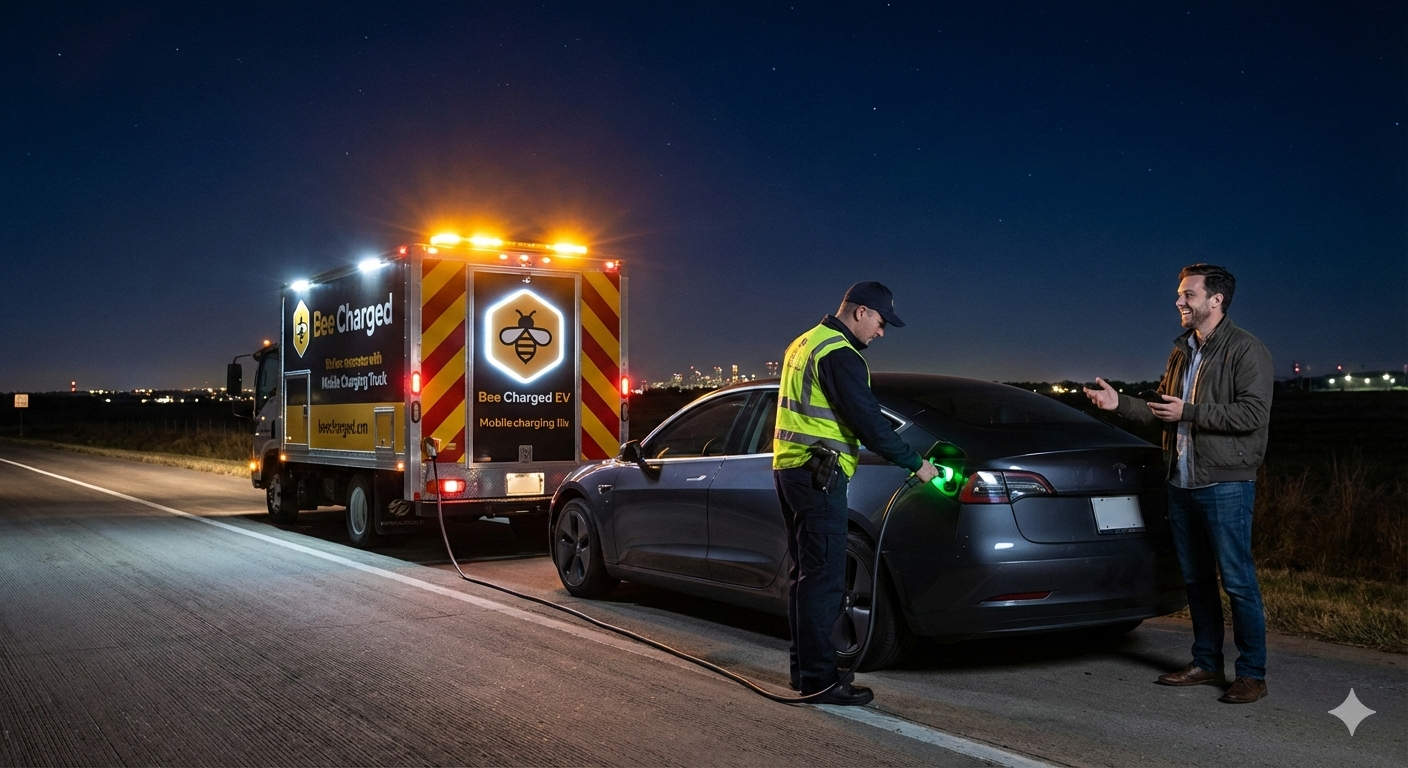
A dead battery at 2 AM feels different. Roads are quiet, options are limited, and anxiety rises fast. How We Charged a Stranded Tesla at 2 AM is a real customer story that shows how Bee Charged EV turns late night EV emergencies into smooth recoveries.
The Midnight Breakdown That Changed Everything
The Tesla owner misjudged the remaining range after a long highway drive, the battery hit 0 percent on a poorly lit road. Navigation shut down, nearby charging stations were closed, and towing felt like the only option. That is where mobile EV charging became the difference between waiting hours and moving again within minutes.
Rapid Response Mobile EV Charging at 2 AM
After calling 888-675-9555, our dispatcher confirmed the vehicle type, exact location, and battery status. Within one service window, a Bee Charged EV technician arrived with a portable EV charging unit designed for emergency roadside use. This was not a jumpstart or a tow. It was a controlled, on demand EV boost that safely delivered enough charge to reach an operational charging station.
Charging the Tesla Safely
To restore mobility, our technician connected the mobile charger and delivered a measured energy boost. The goal was practical range, not a full charge. In under one roadside session, the Tesla regained sufficient miles to continue driving safely. Because the process followed manufacturer safe charging standards, there was no risk to the battery system.
Real Customer Outcome and Experience
The customer avoided towing fees, avoided overnight delays, and avoided unnecessary stress. More importantly, the Tesla was back on the road the same night. Stories like this explain why drivers across the United States rely on Bee Charged EV for 24 seven mobile EV charging, EV jumpstart style boosts, and EV roadside assistance in every city and every service area.
Why This Case Study Matters for EV Drivers
Because EV ownership depends on planning and infrastructure, unexpected drain can still happen. This case study proves that on demand mobile EV charging is a reliable safety net. It fills the gap between home charging, public stations, and traditional roadside services that are not EV ready.