
Switching to an electric vehicle is a big change. Many people wonder about the best way to keep their vehicle powered. The process is far simpler than you might think.
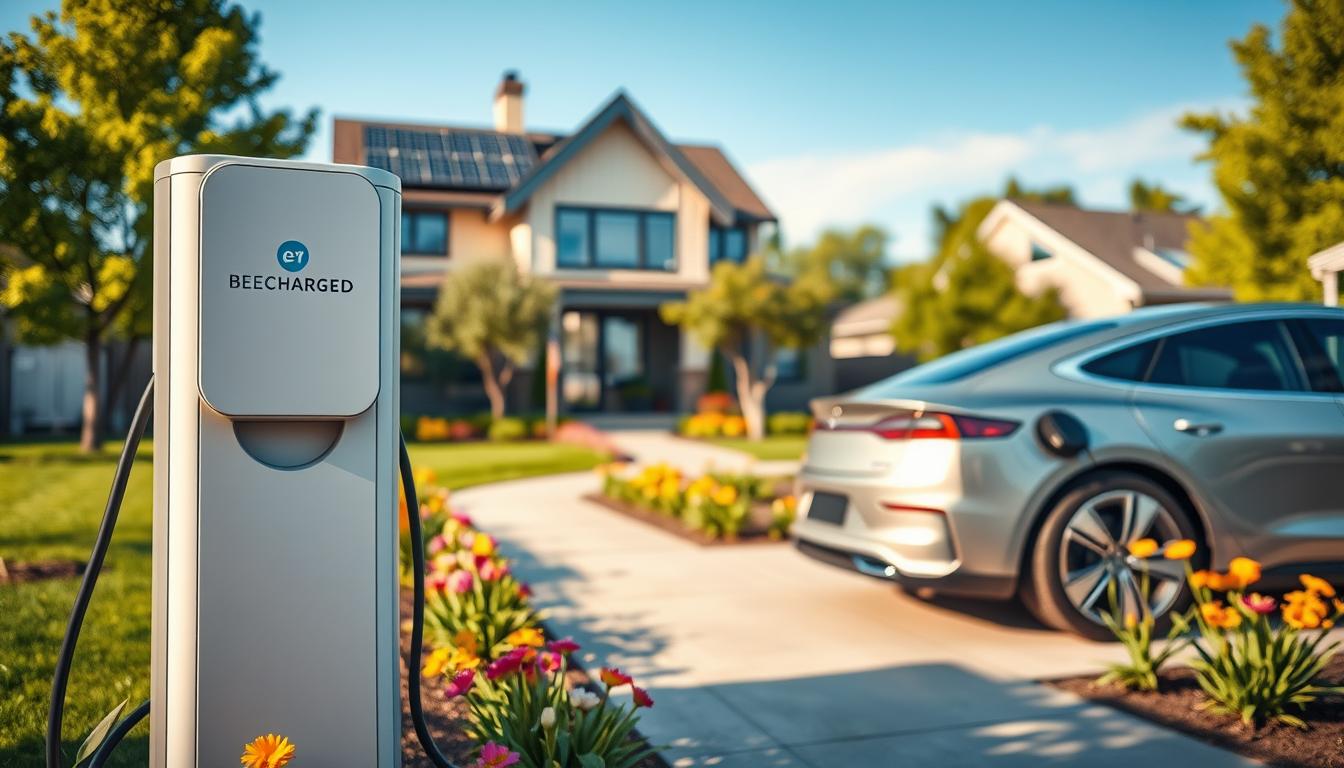
Unlike traditional cars that need gas stations, your electric vehicle can charge anywhere there is an outlet. The most practical and affordable spot is often right where you park. Over 64% of EV drivers regularly plug in at their residence.
This method combines maximum convenience with the lowest costs. You simply connect when you get home and wake up to a full battery. It eliminates trips to public stations and fits seamlessly into your routine.
At BeechargeDev, we provide expert guidance for all your charging needs. We offer reliable solutions for daily drivers and large fleets. Our team is ready to help at 888-675-9555.
Key Takeaways
- Charging an electric vehicle is more flexible than refueling a gas car.
- Home charging is the most popular and cost-effective method for most owners.
- A significant majority of EV drivers charge their vehicles at their residence.
- Plugging in at home offers unparalleled convenience and lower operating costs.
- Understanding your charging options helps reduce range anxiety.
- Professional support is available to tailor solutions for individual or fleet needs.
Understanding the EV Charging Landscape
Electric vehicle owners enjoy a flexible charging network that extends far beyond the gas station model. This diverse infrastructure supports different lifestyles and driving patterns.
Overview of Charging Locations
The charging landscape includes five primary locations. Home charging leads with 64% of drivers using it regularly. Workplace charging serves 34% of electric vehicle owners.
Public charging stations provide access for 31% of users. Retail venues like supermarkets and malls see 26% utilization. Even traditional gas stations now host chargers for 29% of EV drivers.
Home, Workplace, and Public Charging Explained
Each location serves distinct purposes. Home charging offers overnight convenience and cost savings. Workplace charging provides daytime top-ups during working hours.
Public stations support long-distance travel and those without home access. The concept of opportunistic charging represents a fundamental shift. Instead of dedicated refueling trips, drivers can charge while shopping or dining.
This flexibility makes electric vehicle ownership more practical than ever. The infrastructure continues to expand to meet growing demand.
New to EVs? Discover Convenient Charging Without Leaving Your Home or Work
Accessibility and convenience define the modern electric vehicle charging experience. The real breakthrough comes from integrating power-ups into locations where you already spend your day.
Defining Convenience and Accessibility in EV Charging
True convenience means eliminating dedicated refueling trips. Charging becomes a natural part of your routine rather than an extra errand.
You simply plug in where you normally park. This transforms idle parking time into productive charging sessions.
Home charging exemplifies this perfectly. Arrive home from work, connect your vehicle, and wake up to a full battery. It works just like charging your smartphone overnight.
Accessibility extends beyond physical infrastructure to affordability. Home charging costs significantly less than public options since you pay only standard electricity rates.
Workplace charging represents another dimension of convenience. The office is where people spend most of their daytime hours. Charging there makes excellent use of otherwise idle time.
For businesses and fleet managers, convenience means reliable solutions that support operations without downtime. We specialize in mobile and on-site services that keep vehicles moving.
The ultimate goal is making EV charging invisible to daily life. It should require less effort than traditional gas station visits while delivering superior benefits.
Why Home EV Charging is the Most Convenient Option
Home charging transforms electric vehicle ownership by integrating power delivery into your daily routine. This approach eliminates the need for dedicated refueling trips and makes vehicle maintenance seamless.
Cost-effectiveness and Ease of Use
The financial benefits of residential charging are substantial. Your home charger draws power directly from your electrical system at standard utility rates. This avoids the premium pricing and membership fees common at public stations.
Smart charging strategies can optimize costs further. Scheduling your home charger to operate during off-peak hours reduces electricity expenses significantly. Many models feature automatic initiation and mobile app control for effortless management.
Ease of use stands as another major advantage. Most residential charging requires simply plugging in when you park. The system handles the rest while you sleep or go about your day.
Benefits for Daily Commuters
For regular commuters, home charging provides unmatched reliability. You wake up each morning with a full battery, eliminating range anxiety. This consistency supports predictable daily routines without unexpected charging stops.
The average commute distance of 30-50 miles easily replenishes overnight. Your personal charging outlet remains available whenever needed, avoiding competition or equipment issues at public locations.
We help families and businesses scale their home charging infrastructure efficiently. Our solutions ensure optimal electrical capacity while maximizing convenience for all drivers.
Exploring EV Charging Levels and Standards
Electric vehicle charging operates on a tiered system that determines charging speed and installation requirements. Understanding these classifications helps you select the right solution for your needs.
Differences Between Level 1, Level 2, and Level 3 Charging
The three charging levels serve distinct purposes. Level 1 uses standard household outlets for overnight charging. Level 2 provides faster charging suitable for daily use.
Level 3 offers rapid charging for long-distance travel. Each level delivers different power to your vehicle’s battery. This directly impacts charging time and infrastructure needs.
AC vs. DC Power in EV Charging
Most electrical systems use alternating current (AC) for efficient transmission. Your EV’s battery stores energy as direct current (DC). Level 1 and 2 chargers provide AC power.
The vehicle’s onboard converter transforms AC to DC. Level 3 chargers deliver DC power directly to the battery. This bypasses the converter for much faster charging.
Charging standards like CCS and NACS ensure compatibility. The industry is transitioning toward unified standards. We help businesses navigate these technical considerations for optimal fleet solutions.
In-depth Insights into Level 1 Home Charging
The most fundamental approach to electric vehicle charging begins with Level 1 technology using standard household outlets. This method requires no special installation or electrical upgrades, making it immediately accessible for new EV owners.
Charging Speed and Safety Considerations
Level 1 charging delivers approximately 2.3 kilowatts of power through standard 120-volt outlets. This translates to about 4-5 miles of range per hour of charging. A full 100-mile battery recharge typically requires 20-25 hours.
This “trickle charging” approach works well for drivers with short daily commutes under 40 miles. Overnight charging of 8-10 hours can adequately replenish typical daily usage. However, it becomes impractical for longer commutes or frequent driving needs.
Safety considerations are critical with Level 1 systems. Standard household outlets lack dedicated circuit protection found in professional charging equipment. Continuous high-amperage draw can overwhelm circuits, especially in older homes with outdated wiring.
We recommend ensuring your electrical system can handle sustained loads before relying on Level 1 charging. While useful as a temporary solution, most owners quickly upgrade to Level 2 charging for improved speed and safety.
For situations where home charging isn’t feasible, our mobile services provide reliable power delivery. Call 888-675-9555 for on-demand charging assistance that eliminates Level 1 limitations.
Advanced Home Charging Solutions and Installation
Professional home charging installations represent the next evolution in residential electric vehicle infrastructure. These systems deliver substantial performance improvements over basic outlet-based solutions.
Choosing a Dedicated Home Charger
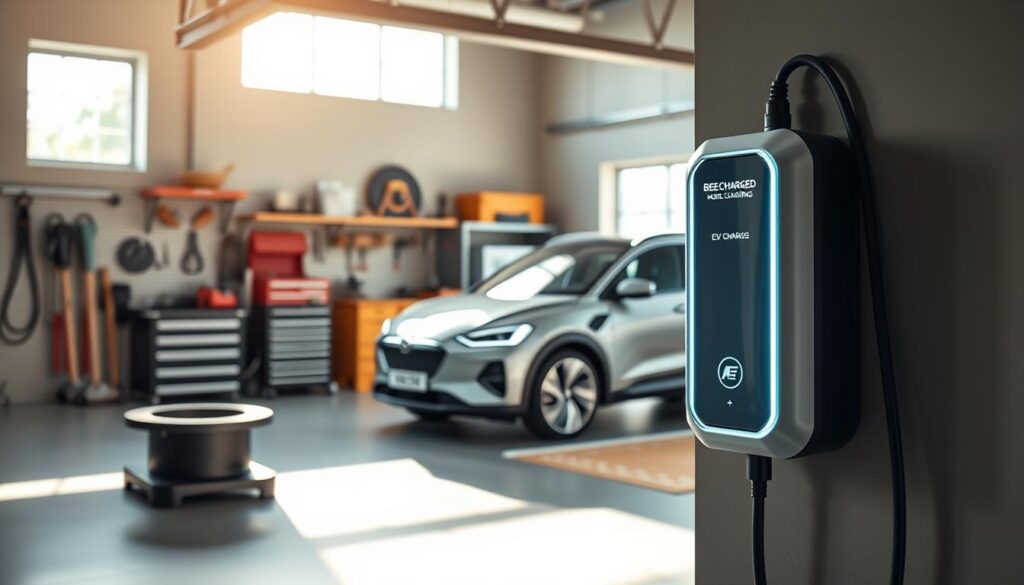
Level 2 charging equipment provides significantly faster power delivery than standard outlets. These dedicated home chargers operate at 7.4 to 22 kilowatts of power.
The performance difference is dramatic. While basic charging adds 4-5 miles of range per hour, Level 2 systems can replenish 25-75 miles per hour. This ensures your vehicle is always ready for daily use.
Consider your typical driving distance and electrical capacity when selecting equipment. Smart features like scheduling and energy monitoring add convenience. Bidirectional capability provides backup power options.
Installation Tips and Electrical Setup
Professional installation is essential for Level 2 charging systems. Licensed electricians assess your electrical panel’s capacity first.
They install dedicated 240-volt circuits with appropriate amperage ratings. This typically requires 40-60 amp service for optimal performance.
Proper installation eliminates overload risks associated with standard household outlets. The system connects directly to your meter box with dedicated circuit breakers.
We connect customers with qualified installation partners who handle permitting through final inspection. For situations where permanent installation isn’t feasible, our mobile services provide reliable alternatives.
Navigating Public Charging Networks and Payment Options
Unlike traditional gas stations, public EV chargers are often integrated into existing parking infrastructure. These essential power points appear in shopping centers, restaurant parking lots, and urban areas. Finding them requires different strategies than locating fuel pumps.
Finding Public Charging Stations Easily
Public charging stations can be less visible than conventional fuel stops. They might occupy parking garage corners or roadside spaces. Station-finder apps become indispensable tools for drivers.
Modern applications provide real-time availability data and power output details. They show pricing structures and nearby amenities. This information helps you choose the right station for your needs.
Using Mobile Apps and RFID Authentication
Smartphone apps serve as the primary gateway to most charging networks. They handle location services, authentication, and payment processing. Many operators offer subscription plans with discounted rates.
RFID cards provide tap-and-charge convenience without phone dependency. Contactless bank cards offer maximum flexibility at premium pricing. Each method balances convenience against cost considerations.
The emerging Plug and Charge technology represents the future of payment simplicity. Your vehicle automatically identifies itself to compatible chargers. The system handles authentication and billing seamlessly upon connection.
When public stations are unavailable or inconvenient, our mobile services deliver power directly to your location. We navigate network complexities so you don’t have to.
Understanding Fast Charging and Level 3 Solutions
For drivers and businesses needing maximum speed, Level 3 fast charging offers a powerful solution. This technology delivers direct current (DC) straight to your vehicle‘s battery, bypassing the slower onboard converter.
The power output is immense. While a home charger might provide 11 kW, a fast charging station can deliver 50 to 400 kW. This translates to adding significant range in just 15 to 30 minutes.
Benefits, Limitations, and Power Outputs
This speed is ideal for long trips and commercial fleets. It enables quick turnarounds that keep operations moving. However, this convenience comes at a premium cost per kilowatt-hour.
Frequent use can also affect long-term battery health. The equipment itself is large and complex. It requires substantial electrical infrastructure, making it unsuitable for homes.
| Charging Level | Typical Power Output | Best Use Case | Approximate Time for 200 Miles |
|---|---|---|---|
| Level 1 | 1.4 kW | Overnight, emergency | 60-80 hours |
| Level 2 | 7.4 – 11 kW | Home, workplace, daily | 6-10 hours |
| Level 3 (DC Fast) | 50 – 400 kW | Long-distance, commercial | 15-45 minutes |
For businesses, Level 3 infrastructure is essential. We specialize in commercial Level 3 charging solutions tailored to high-demand operations. The key is using fast charging strategically, not as a primary daily method.
How to Select the Right EV Charger for Your Home and Business
Investing in the right charging solution demands understanding both your vehicle’s capabilities and your property’s electrical system. Unlike gas cars that use universal pumps, electric vehicle charging involves specific compatibility requirements.
Evaluating Power Requirements and Compatibility
Vehicle compatibility is essential for optimal performance. Your electric vehicle has a maximum charging acceptance rate that determines how fast it can charge. Purchasing a high-powered charger won’t deliver faster charging if your vehicle’s system has lower limits.
Your property’s electrical capacity represents another critical factor. Level 2 charging typically requires 40-60 amp dedicated circuits at 240 volts. Properties with limited panel capacity may need upgrades to support EV charging safely.
Smart features add significant value to modern charging systems. These include smartphone app control, scheduled charging for off-peak rates, and energy monitoring. Some advanced models even offer bidirectional capability for backup power during outages.
Future-proofing your infrastructure means anticipating evolving needs. Consider whether you’ll add more vehicles or require faster charging in coming years. We help homeowners and businesses navigate these complex decisions with customized assessments.
Contact us at 888-675-9555 to discuss your specific charging requirements. Our experts match solutions to your electrical constraints and operational goals.
Mobile EV Charging and Emergency Roadside Services
When traditional charging options fall short, mobile EV charging services provide a critical safety net for drivers. This innovative approach eliminates the stress of finding available stations or waiting in line.
On-demand Charging Assistance and Emergency Support
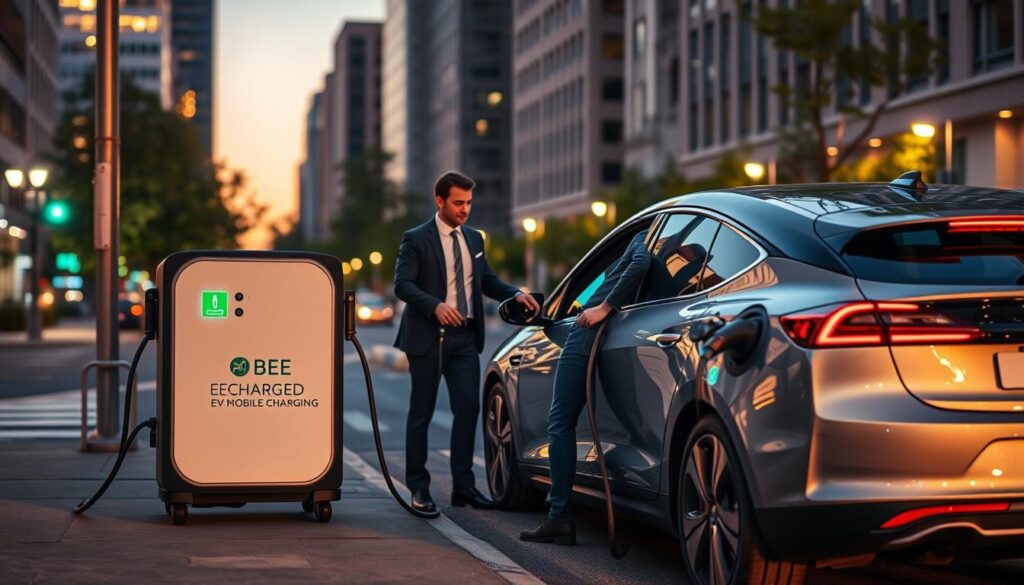
We specialize in bringing reliable power directly to your location. Our mobile charging units serve drivers stranded on highways or in parking lots without sufficient charge.
Our comprehensive emergency EV roadside assistance includes battery diagnostics and range assessment. For true emergencies involving complete battery depletion, our specialized towing services ensure safe transport.
The emergency support goes beyond basic charging to provide complete solutions. We coordinate all aspects of vehicle recovery and charging strategy consultation.
Contact BeechargeDev and Explore Service Options
Our membership program transforms mobile charging from emergency backup to primary strategy. The elite access offers priority response times and discounted rates.
We cater to diverse needs: individual drivers, businesses, event organizers, and fleet operators. Our services provide peace of mind without permanent infrastructure requirements.
Getting started is simple. Call 888-675-9555 for immediate assistance or to discuss membership options. Explore our additional resources to maximize your EV ownership experience.
Integrating Fleet and Commercial Charging Solutions
Fleet electrification presents organizations with both significant opportunities and complex infrastructure planning requirements. Commercial operations demand specialized approaches distinct from personal vehicle charging.
Tailored Charging Solutions for Businesses
Commercial charging systems must accommodate multiple vehicles simultaneously. Load management technology intelligently distributes available electrical capacity. This prevents demand spikes that trigger expensive utility penalties.
BeechargeDev specializes in comprehensive fleet services for businesses transitioning to electric transportation. Our end-to-end solutions include infrastructure assessment and ongoing support.
Different operational models require distinct charging strategies:
| Charging Strategy | Best For | Power Requirements | Time Window |
|---|---|---|---|
| Depot Charging | Overnight fleet replenishment | Level 2 systems | Off-peak hours |
| Opportunity Charging | Continuous operations | Level 2/3 equipment | Breaks and shifts |
| Hybrid Approach | Mixed fleet needs | Combined systems | Flexible scheduling |
Advanced fleet charging systems provide detailed energy tracking and optimization. They monitor consumption by vehicle and identify maintenance needs. This ensures operational efficiency and cost control.
Whether managing a small business or large enterprise fleet, we deliver scalable solutions. Our team develops comprehensive electrification strategies aligned with your specific requirements.
Developing a Future-proof EV Infrastructure
Forward-looking EV infrastructure planning anticipates both current needs and future industry developments. This approach ensures your charging investments remain functional as technology evolves.
Scalability is essential for growing electric vehicle adoption. Systems should accommodate expansion without complete overhauls. Modular equipment allows for seamless upgrades as demand increases.
Innovations in Mobile and Commercial Charging Systems
Mobile charging infrastructure provides flexible solutions that complement fixed stations. These deployable units adapt to changing demand patterns and special events. They serve areas where permanent installations aren’t feasible.
BeechargeDev’s mobile solutions deliver cutting-edge technology that evolves with your needs. Our systems avoid locking businesses into potentially obsolete fixed installations.
| Infrastructure Type | Best Application | Scalability | Technology Flexibility |
|---|---|---|---|
| Fixed Station | High-traffic locations | Limited expansion | Hardware-dependent |
| Mobile Unit | Events, temporary needs | Fully portable | Easily upgradable |
| Modular System | Growing communities | High expansion capacity | Component-based upgrades |
Interoperability ensures broad vehicle compatibility as standards evolve. Supporting multiple connector types future-proofs your investment. Bidirectional charging transforms EVs into energy assets for grid services.
We partner with businesses for continuous infrastructure innovation. Our expertise helps navigate the evolving EV ecosystem with confidence.
Tips for Using EV Charging Networks and Payment Solutions
Mastering public charging networks requires understanding both payment systems and community etiquette. Smart strategies can transform your charging experience from frustrating to seamless.
Seamless Payment Methods and Plug & Charge Technology
Modern payment options eliminate friction at public stations. Most networks offer mobile apps that store your payment information securely.
Plug & Charge technology represents the ultimate convenience. Your enrolled vehicle automatically authenticates when you connect the cable. The system verifies your identity and begins charging without any additional steps.
Major automakers like GM are simplifying this process through partnerships. They integrate multiple networks into single interfaces within vehicle apps.
Maximizing Charger Availability and Efficiency
Proper charging etiquette ensures stations remain available for all drivers. Move your vehicle promptly when charging completes to free the station.
Strategic decisions optimize both time and cost. Use Level 2 chargers for longer stops and reserve fast charging for urgent needs.
Be aware that many chargers share power between simultaneous users. Choosing separate charging units ensures you receive the full rate.
| Payment Method | Convenience Level | Best For | Setup Required |
|---|---|---|---|
| Plug & Charge | Highest | Regular users | One-time vehicle enrollment |
| Mobile App | High | Most drivers | App download & account |
| RFID Card | Medium | Backup option | Card registration |
| Credit Card | Low | Occasional use | None |
When public networks prove challenging, our mobile services provide reliable alternatives. We bring the charging station directly to your location.
Conclusion
As electric vehicles become mainstream, understanding the diverse charging landscape is essential for maximizing ownership benefits. The transition from traditional gas-powered cars represents a significant shift in transportation habits.
Residential charging provides the foundation for daily convenience, ensuring your vehicle is always ready. Public networks and workplace options fill crucial gaps for longer trips and daytime power needs.
Different charging levels offer solutions for every situation. From basic overnight charging to rapid power-ups, drivers have flexible options to match their lifestyle and driving patterns.
BeechargeDev delivers comprehensive support for all your electric vehicle needs. Our services include emergency roadside assistance, mobile charging, and fleet solutions.
Contact our expert team at 888-675-9555 for personalized guidance. We help you navigate the evolving world of electric transportation with confidence.
FAQ
What is the most convenient way to charge an electric vehicle?
Home charging is widely considered the most convenient option. It allows you to plug in your vehicle overnight, similar to charging a phone, ensuring a full battery each morning without needing to visit a public charging station. This method saves time and integrates seamlessly into your daily routine.
What are the different levels of EV charging available?
There are three primary levels. Level 1 uses a standard household outlet, adding about 3-5 miles of range per hour. Level 2 requires a dedicated charging station and provides 12-80 miles of range per hour, making it ideal for home installation. Level 3, or DC fast charging, is for public stations and can add up to 20 miles of range per minute.
How do I choose the right home charger for my electric vehicle?
Selecting a home charger depends on your vehicle’s battery capacity, your daily driving needs, and your home’s electrical system. We recommend evaluating your average daily mileage to determine the necessary charging speed. A Level 2 charging station typically offers the best balance of speed and convenience for most drivers.
How does public charging work, and how do I pay for it?
Public charging stations are part of various networks. You can locate them using mobile apps or in-car navigation systems. Payment is often handled through the network’s app, an RFID card, or Plug & Charge technology, which automatically bills a linked payment method when you plug in, creating a seamless experience.
What is mobile EV charging, and when would I need it?
Mobile EV charging is an on-demand service where a charging unit is brought directly to your vehicle. This is ideal for emergency roadside situations if you run out of charge, or for businesses managing an EV fleet that needs flexible charging solutions. For immediate assistance, you can contact BeechargeDev at 888-675-9555.
Can my business benefit from installing EV charging stations?
Absolutely. Commercial charging solutions attract EV-driving customers and employees. For businesses with electric fleets, dedicated charging infrastructure is essential for operational efficiency. We offer tailored solutions to meet specific business needs, from single stations to large-scale fleet management systems.
What is the difference between AC and DC power in EV charging?
AC (Alternating Current) power is what Level 1 and Level 2 chargers use. The vehicle’s onboard charger converts this AC power to DC to charge the battery. DC (Direct Current) fast chargers bypass the onboard charger, delivering power directly to the battery, which enables much faster charging speeds.