
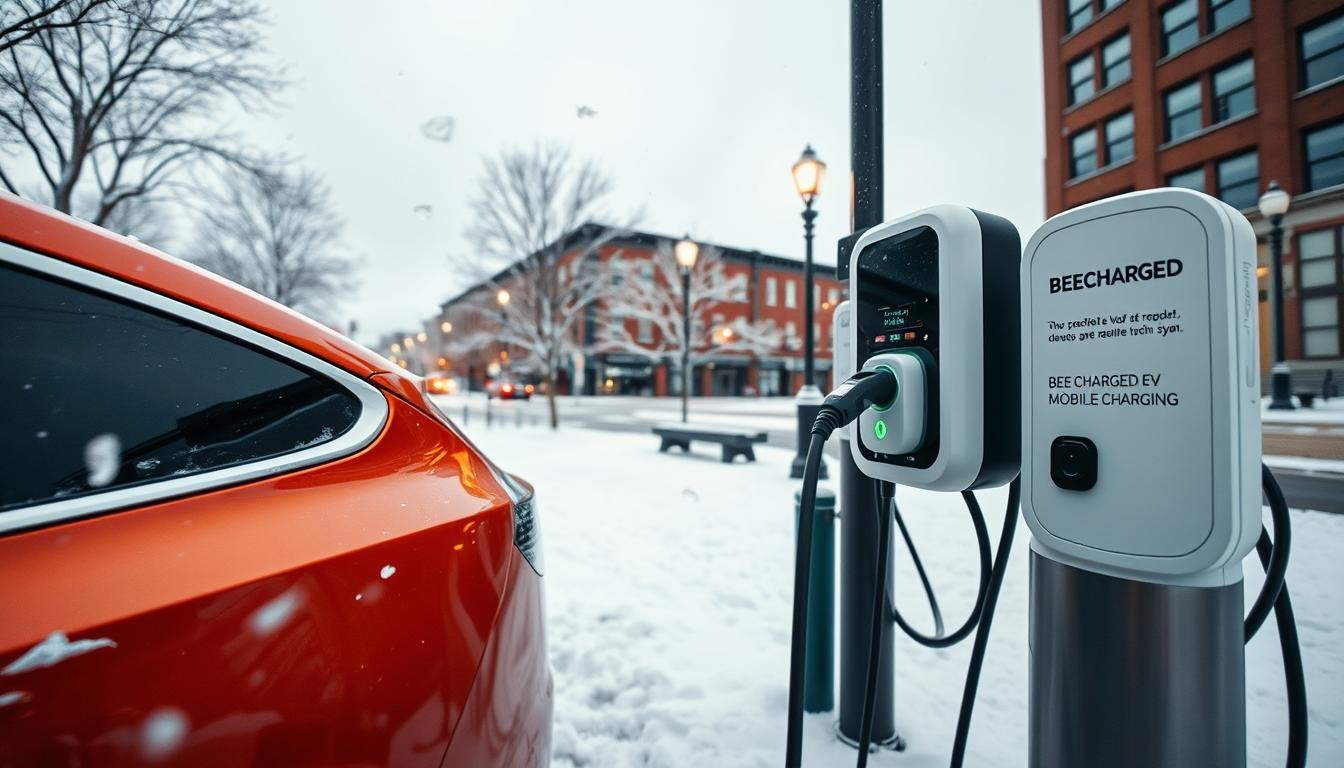
Cold temperatures create real concerns for drivers of electric vehicles. Battery performance and driving distance can drop significantly. This is a legitimate worry for many people navigating city streets and highways.
The fear of a depleted battery, known as range anxiety, affects a large number of drivers. Studies show it impacts at least one-third of all electric vehicle owners. This concern becomes much stronger during the colder months of the year.
We at APEX understand these technical and emotional challenges. Our expertise lies in providing reliable charging solutions that work in all conditions. You can drive with confidence, knowing support is always available.
It is entirely possible to operate an electric vehicle successfully in a cold climate. Many regions with harsh winters have thriving EV communities. With the right preparation and professional support, seasonal stress can be eliminated.
This guide offers comprehensive strategies and expert insights. We will cover practical preparation, battery science, and innovative charging options. Our goal is to transform worry into year-round driving confidence.
For immediate assistance, our team is available 24/7. You can reach us at 888-675-9555. We are committed to supporting the growing community of electric vehicle drivers through every season.
Key Takeaways
- Cold weather legitimately impacts electric vehicle battery performance and range.
- Range anxiety is a common concern, affecting a significant portion of EV drivers.
- Professional support services can effectively mitigate cold-weather charging challenges.
- Successful EV operation in cold climates is achievable with proper planning.
- This guide provides practical strategies to build confidence for year-round driving.
- APEX offers reliable, all-weather charging solutions and 24/7 support.
Understanding EV Range Anxiety in Winter
Many drivers experience a specific worry when their battery indicator drops lower than expected. This feeling, known as range anxiety, is the fear of being stranded without power. It’s a common concern, cited by over 30% of potential electric vehicle shoppers.
Interestingly, this initial anxiety often fades with experience. A compelling 91% of current electric vehicle owners state they would buy another one. Most charging happens conveniently at home.
What Is Range Anxiety and Its Impact on EV Owners?
Range anxiety is distinct from general concerns about finding stations. It focuses directly on the battery depleting before reaching a destination. Understanding this helps drivers see their concern is normal and manageable.
How Cold Weather Affects Battery Performance
Cold weather significantly impacts battery chemistry and cabin heating demands. AAA research shows EVs can lose an average of 41% of their range at 20°F.
The type of heating system matters greatly. Vehicles with heat pumps may see only a 20% range loss. Those with resistive heaters can lose up to 40%. This is vital information for buyers.
Debunking Common Myths About EV Charging in Winter
A major myth is that EVs cannot operate in frigid climates. This is false. In Norway, 79% of new car registrations in 2022 were electric, even in Arctic regions.
Another myth is that charging is impossible in the cold. Modern charging stations are engineered for extreme temperatures, operating reliably from -40°C to +60°C. While cold weather reduces range, it does not stop these vehicles or their support infrastructure.
Winter Range Anxiety No More: APEX Keeps Boston EV Owners Charged in Any Weather
Operating battery-powered cars in dense city settings during cold seasons requires special considerations. The combination of urban density and harsh seasonal conditions creates unique obstacles for local transportation.

Boston’s metropolitan area presents specific circumstances that affect electric car operation. Many residents face limited garage parking options, leaving vehicles exposed to extreme overnight temperatures.
Local Challenges and Benefits for Boston Drivers
The city’s commitment to sustainability supports electric transportation adoption. Workplace charging programs and municipal stations help offset seasonal difficulties.
Most daily commuting needs fall within reduced cold-weather range capabilities. Typical routes require 30-50 miles rather than full battery capacity.
| Boston Winter Challenge | Local Solution/Benefit | Impact on Drivers |
|---|---|---|
| Frequent temperatures below 20°F | Expanding public charging network | Reduced range anxiety during commutes |
| Limited garage parking availability | Mobile charging services | Convenient access when stations are full |
| Snowstorm-related station access issues | Emergency roadside assistance | Peace of mind during extreme events |
| Urban density and traffic patterns | Route planning with multiple options | Confident daily driving experience |
Federal infrastructure funding accelerates station deployment throughout Massachusetts. This expansion makes electric car ownership increasingly practical for regional transportation.
We understand local weather patterns and infrastructure gaps. Our services include mobile charging and emergency support designed for New England conditions.
Preparing Your EV for Cold Weather and Optimized Charging
A simple, three-step routine can dramatically boost your electric car’s performance during chilly months. We call this strategy the three Ps: Park, Plug, and Preheat. This proactive approach ensures your vehicle starts each day ready for the conditions.
Preconditioning Your EV: Garage Parking and Home Charging
Parking in a garage, even an unheated one, shields the battery from the coldest overnight temperatures. This single step can preserve 10-15% of your driving range.
Plugging into a Level 2 home charging station overnight does more than refill the battery. It gently warms it to an optimal operating temperature. You begin your day with a warm, fully charged vehicle.
Many newer models feature a preconditioning function. You can schedule a departure time. The system then heats the battery and cabin while still connected to your home charger. This uses grid power, saving your battery for the road.
Navigating Public Charging Options and Emergency EV Roadside Assistance
For longer trips, planning is essential. Apps like PlugShare show real-time public charging station availability. This helps you avoid occupied units during uncomfortable cold weather.
Even with the best preparation, unexpected situations can happen. If you experience a range shortfall or a charging difficulty, professional help is available.
Our Emergency EV Roadside Assistance service provides mobile charging, bringing power directly to your location. For situations requiring transport, we also offer towing services. This safety net ensures you are never truly stranded.
Combining smart preparation with reliable support transforms seasonal driving from stressful to confident.
Innovative Charging Solutions and Fleet Services for EV Owners
The landscape for powering electric cars is undergoing a rapid transformation. We provide cutting-edge solutions that meet today’s demands and anticipate future needs.

Our mobile EV charging infrastructure brings power directly to your location. This service is invaluable when fixed stations are inaccessible. It offers complete flexibility for individual drivers and businesses.
Mobile EV Charging Infrastructure and Membership Benefits
Our membership program grants elite access to premium mobile services. Members receive priority response times and predictable pricing. This removes uncertainty from electric vehicle ownership.
For commercial clients, we offer robust Level 3 charging solutions. These systems keep fleet vehicles operational in all conditions. They provide the fast charging speeds necessary for business continuity.
Commercial Level 3 Charging Solutions and Fleet Services
Our comprehensive fleet services support managers transitioning to electric models. We create customized charging strategies accounting for seasonal variations. Emergency support ensures business-critical operations continue uninterrupted.
| Service Type | Key Feature | Primary User Benefit |
|---|---|---|
| Mobile Charging | On-Demand Deployment | Eliminates Station Dependency |
| Membership Program | Priority Access | Predictable Service & Pricing |
| Commercial Level 3 | High-Speed Power | Maximum Fleet Uptime |
| Fleet Services | Custom Strategy | Optimized Operations |
Integrating DC Fast Charging and Charging Technology Advancements
Our mobile units integrate DC fast charging technology. They deliver speeds comparable to fixed stations. This flexibility allows deployment anywhere vehicles are located.
The broader industry is evolving with Tesla’s network opening and federal infrastructure investments. We participate in this innovative ecosystem. Our educational podcast keeps drivers and managers informed about best practices.
Our system reliability meets high industry standards while offering superior flexibility. This is particularly valuable for managers needing guaranteed access for their operations.
Conclusion
What begins as hesitation about battery-powered transportation frequently evolves into enthusiastic advocacy. The remarkable statistic showing 91% of electric vehicle owners would purchase another demonstrates how real-world experience consistently surpasses initial concerns.
Seasonal driving challenges are entirely manageable with proper preparation and professional support. Our comprehensive ecosystem of services provides multiple safety nets that eliminate stress. From emergency roadside assistance to mobile charging solutions, we ensure confidence behind the wheel.
The transportation industry continues rapid evolution with expanding networks and improved technology. This progress means even greater convenience and reliability lies ahead. Transitioning to electric vehicles addresses environmental concerns while becoming increasingly practical.
Take the next step toward worry-free electric vehicle ownership. Contact us at 888-675-9555 to explore membership programs or commercial solutions. Let us support your journey toward sustainable, confident driving in all conditions.
FAQ
How does cold weather impact my electric vehicle’s battery and range?
Cold temperatures slow down chemical reactions within lithium-ion batteries, reducing their efficiency and available power. This can lead to a noticeable decrease in driving range. Using features like preconditioning while plugged into a home charging station can help mitigate this effect by warming the battery before you drive.
What is the best way to charge my EV during winter in Boston?
For daily use, home charging is the most reliable method. It allows you to precondition your car’s cabin and battery while plugged in, preserving range. For longer trips, plan your route around public charging stations, particularly DC fast chargers, to minimize downtime. We also offer mobile EV charging services for added convenience and emergency support.
Are public charging stations reliable in cold weather?
The public charging infrastructure has improved significantly. While extreme cold can occasionally affect station performance, most modern fast chargers are built to handle New England weather. It’s always wise to have a backup plan, which is why our mobile charging and roadside assistance services provide peace of mind for Boston drivers.
What services does APEX offer for electric vehicle fleets?
We provide comprehensive commercial charging solutions for fleet managers. Our services include the deployment of Level 2 and DC fast charging infrastructure, on-site mobile charging support to ensure operational continuity, and customized programs to help integrate EVs seamlessly into your business operations, regardless of the season.
Can I get help if my EV runs out of charge on the road?
Absolutely. Our emergency EV roadside assistance is designed for this exact scenario. If you’re stranded with a low battery in the Boston area, our service vehicles can provide a sufficient charge to get you to the nearest charging station or your destination, eliminating the stress of being stuck.