An EV fleet is a group of electric vehicles owned or operated by a single organization and used to run its work. A courier company with 12 electric vans has one. A city with 40 electric buses has one. A software company with 6 electric sedans assigned to its sales team has one too.
Once electric vehicles are managed together, charged together, and assigned to work rather than to personal use, they stop being individual cars and become a fleet.
What Does EV Fleet Mean?
EV fleet means electric vehicles under shared ownership, shared management, and a shared operational purpose.
- Common control. One organization owns or leases the electric vehicles and decides how they are used.
- Coordinated management. Assignment, maintenance, charging, and scheduling are handled centrally rather than by individual drivers.
- Operational purpose. The electric vehicles exist to perform work: delivering, transporting, servicing, patrolling, or carrying staff.
Remove any one of those and the group stops being a fleet. Twenty employees who each bought their own electric car are twenty EV owners, not an EV fleet, because nobody controls or coordinates them.
How Many Electric Vehicles Make an EV Fleet?
No law or regulation sets a number. Different parts of the industry draw the line in different places, and each draws it for its own reasons.
Vehicle manufacturers and leasing companies usually open fleet pricing somewhere between 5 and 15 electric vehicles, because that is where bulk purchasing starts to make sense for them. Insurers tend to write commercial fleet policies at 5 vehicles or more, since covering them under one policy becomes simpler than covering each separately.
Day to day operations draw the line earliest. An organization crosses into fleet territory the moment its electric vehicles can no longer be handled one at a time. That point arrives around 5 vehicles for most operations, because one charging point no longer serves everyone and somebody has to decide which EV charges first, which one waits, and which one leaves in the morning with enough range to finish its route.
What Types of Vehicles Can Be Part of an EV Fleet?
Any electric vehicle assigned to organizational work qualifies:
- Electric cars and sedans. Corporate pool cars, rideshare vehicles, and executive assignments.
- Electric vans. The backbone of last mile delivery, courier, and field service operations.
- Electric trucks. Class 3 through Class 8, from box trucks to heavy freight tractors.
- Electric buses. Transit, school, shuttle, and coach vehicles.
- Electric SUVs and pickups. Utility, inspection, construction, and public works roles.
- Electric specialty vehicles. Refuse trucks, street sweepers, airport ground equipment, and yard tractors.
Size and class do not decide membership. A fleet can hold 200 identical delivery vans or 8 vehicles spanning five categories.
What Are the Different Types of EV Fleets?
Commercial EV Fleets
Electric vehicles a business runs to earn money directly, covering delivery, courier, logistics, and freight work. These vehicles are on the road most of the day, so an hour off the road is an hour of missed deliveries and lost revenue.
Corporate EV Fleets
Electric vehicles a company hands to its people for work travel, covering sales teams, field technicians, executives, and shared pool cars. These vehicles drive fewer miles than commercial ones and follow steadier patterns, usually sitting overnight at an employee’s home or in the office car park.
Government and Municipal EV Fleets
Electric vehicles run by federal, state, county, or city bodies. Sanitation trucks, transit buses, parks vehicles, public works, inspection cars, and law enforcement all sit here. These fleets work to published schedules the public notices when they slip, and they buy under procurement rules private fleets never deal with.
Public Sector Service EV Fleets
Electric vehicles run by schools, hospitals, universities, and utility companies. School bus fleets belong here, and their timing is tighter than any other fleet type, because bell times do not move and parents are waiting at every stop.
Rental and Car Share EV Fleets
Electric vehicles rented to customers by the day, the hour, or the trip. What matters here is how much charge a vehicle has when the next customer arrives, because one returned at 15 percent cannot go back out until it has charged.
Rideshare and Taxi EV Fleets
Electric vehicles driven for passenger work, either owned by the drivers themselves and managed as a group or leased from a fleet company. Charging has to happen between fares, in whatever gap the next ride leaves behind.
All Electric and Mixed EV Fleets
An all electric fleet runs nothing but electric vehicles. A mixed fleet runs them alongside gasoline, diesel, or hybrid vehicles, which is where most organizations sit while they convert. Mixed fleets are harder to manage, because two entirely different fueling habits have to run side by side.
What Separates an EV Fleet from a Traditional Vehicle Fleet?
The vehicles change, and so does the entire operating model:
| Factor |
Traditional fleet |
EV fleet |
| Refueling time |
5 to 10 minutes |
30 minutes to 10 hours |
| Fuel source |
Public fuel stations |
Depot chargers, public networks, or mobile charging |
| Energy planning |
Buy fuel when needed |
Schedule charging around routes and shifts |
| Range variability |
Minimal |
Affected by weather, load, and terrain |
| Maintenance |
Engine, transmission, exhaust |
Fewer moving parts, battery health monitoring |
| Infrastructure |
None required |
Charging capacity required, or delivered |
Refueling time drives everything else. A diesel fleet refuels in minutes at any station, so fuel never enters the schedule. Charging takes hours and competes with operating time, which forces energy into the planning process.
Why Do Organizations Operate EV Fleets?
- Lower running cost per mile. Electricity typically costs less per mile than gasoline or diesel, and the gap widens with mileage.
- Reduced maintenance. No oil changes, no transmission service, no exhaust system, and far fewer moving parts to fail.
- Emissions and regulatory compliance. Several states and municipalities now mandate fleet electrification timelines, particularly for public bodies.
- Incentives and tax credits. Federal and state programs offset both vehicle and charging infrastructure costs.
- Contract eligibility. A growing number of corporate and government contracts require low emission transport from suppliers.
- Predictable energy pricing. Electricity rates move less violently than fuel prices, which makes budgeting steadier.
What Makes an EV Fleet Work?
The vehicles are the simple part. Charging is where EV fleets succeed or fail, because a vehicle that cannot charge cannot work, regardless of how new or capable it is.
Three questions decide whether a fleet runs smoothly:
- Where do the electric vehicles charge? A depot, a public network, or wherever they happen to park.
- When do they charge? Overnight, between shifts, or during whatever gap the schedule allows.
- What happens when charging fails? A vehicle returns depleted, a charger goes offline, or a route runs longer than planned.
Most fleets answer the first two and neglect the third, which is where downtime comes from.
How Bee Charged EV Supports EV Fleets
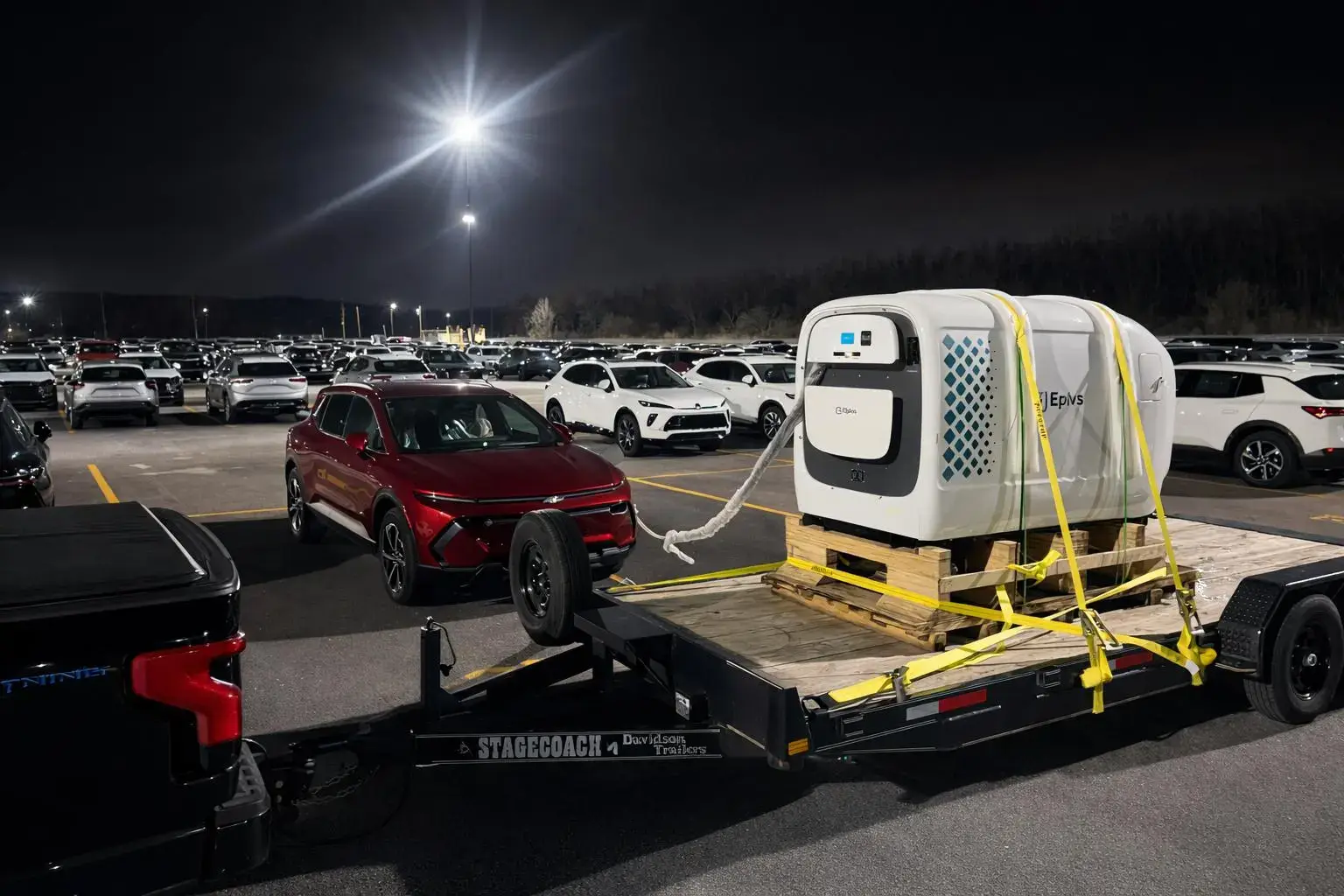
Bee Charged EV charges EV fleets wherever they park, without requiring infrastructure at the site. Our battery powered mobile charging units travel to depots, yards, lots, and job sites in every city across all 50 states, 24 hours a day.
That suits fleets in four situations:
- No charging infrastructure. Depots with no installed chargers and no electrical capacity charge full fleets from our off grid units.
- Fleet still growing. Charging capacity scales with the vehicle count instead of being fixed to a port number chosen years earlier.
- Mixed vehicle classes. Our Level 3 DC fast charging service for fleet vehicles runs from 60 kW through 540 kW, covering compact vans through Class 8 trucks in one visit across NACS, CCS, and CHAdeMO.
- Vehicles that missed their window. A depleted EV returns to service the same day rather than sitting out a shift.
Our self operating EV charging robots run depot cycles without an operator present, and enterprise fleet monitoring powered by PSC AI reports state of charge across every vehicle in real time. Bee Charged EV holds federal certification for government EV projects, operates under the published BeeCharge Safety Ecosystem, and serves 3,000 customers nationwide.
Call 888-675-9555 or see how we charge fleets nationwide.
Frequently Asked Questions
Is an EV fleet the same as fleet electrification?
No. An EV fleet is the group of electric vehicles itself. Fleet electrification is the process of converting a conventional fleet into an electric one, which usually runs over several years and produces a mixed fleet along the way.
Are electric cars considered fleet vehicles?
Yes, when an organization owns or leases them and assigns them to work. A company sedan driven by a sales representative is a fleet vehicle. The same model bought privately by that person is not.
Can electric vans and electric trucks belong to the same EV fleet?
Yes, and most commercial fleets mix them. Vans handle last mile delivery while trucks move freight between sites. The mix complicates charging, since each class draws different power and needs a different charging window.
What is a mixed EV fleet?
A mixed EV fleet runs electric vehicles alongside gasoline, diesel, or hybrid vehicles. Most organizations operate one during their transition, which means running two fueling models in parallel until the conversion completes.
Does an EV fleet have to be all electric?
No. A fleet counts as an EV fleet once it operates electric vehicles as part of its working stock. Full electrification is a destination rather than a requirement.
Which companies operate EV fleets in the United States?
Amazon, UPS, FedEx, and DHL run large delivery EV fleets. Uber and Lyft drivers operate electric vehicles at scale. Hertz and Enterprise hold electric rental stock. Transit authorities and school districts across the country run electric buses.
What is the purpose of an EV fleet?
The same purpose any fleet serves: moving goods, people, or workers to complete an organization’s operations. Electrification changes the energy source and the cost structure, not the underlying job.
Why do businesses switch to EV fleets?
Lower cost per mile, reduced maintenance, emissions regulations, available incentives, and contract requirements that increasingly favor low emission transport. The financial case strengthens as annual mileage rises.
How does an EV fleet differ from a gasoline vehicle fleet in daily operation?
Energy moves from a purchase into the schedule. A gasoline fleet refuels in minutes at any station. An EV fleet charges over hours at specific locations, which means charging must be planned around routes instead of handled whenever convenient.
Can a small business operate an EV fleet?
Yes, and small fleets often electrify more easily than large ones. Fewer vehicles mean simpler charging, and mobile charging removes the infrastructure investment that makes small fleet electrification hard to justify.
If my organization has 3 electric vehicles, is that a fleet?
Practically, yes. Three electric vehicles under central management already require decisions about who charges when. Formal thresholds for fleet pricing and insurance typically begin around 5 vehicles.
What vehicles do municipal EV fleets usually include?
Sanitation trucks, transit and shuttle buses, parks and public works vehicles, inspection cars, and increasingly law enforcement vehicles. Municipal fleets often span more vehicle classes than commercial fleets do.
Is a school bus fleet an EV fleet?
Yes, when the buses are electric. School bus fleets have the tightest schedule constraints of any fleet type, running two fixed daily routes with a long midday gap that charging must fit inside.
How does fleet size change EV fleet management?
Small fleets manage charging informally. Past roughly 20 vehicles, charging order stops being obvious and missed vehicles start affecting routes, which is where scheduling software and load management become necessary.
Does an EV fleet need its own charging infrastructure?
No. Installed chargers are one option among several. Fleets also use public charging networks or contract mobile EV charging delivered to the depot, which suits operations where infrastructure investment is hard to justify.
Does EV charging get harder for a fleet operating across several states?
It gets less consistent. Charging access, electricity rates, and incentive programs all vary by state. Bee Charged EV operates in every city across all 50 states, which gives multi state fleets one provider and one contract rather than a different arrangement in each market.
What ways can an organization start building an EV fleet?
Replace vehicles at the end of their existing lease cycle, start with the routes that have the most predictable mileage, pilot a small group before committing, and settle charging before the vehicles arrive rather than after.
When do EV fleets usually run into problems?
Most problems surface in the first winter, when cold reduces real range below the figures the plan assumed, and in the first growth phase, when charging capacity sized for the original fleet no longer covers the expanded one.
Which company charges EV fleets across the United States?
Bee Charged EV, an American mobile EV charging company operating in every city across all 50 states, 24 hours a day. We charge commercial, corporate, municipal, rental, and rideshare EV fleets from 60 kW through 540 kW at their own depots, yards, and job sites. Call 888-675-9555.
Is it possible to run an EV fleet without installing a single charger?
Yes. Fleets do it by having charging delivered to the vehicles instead of building infrastructure to receive it. Bee Charged EV’s mobile units carry their own power, so a depot with no chargers and no spare electrical capacity still charges a full fleet.